
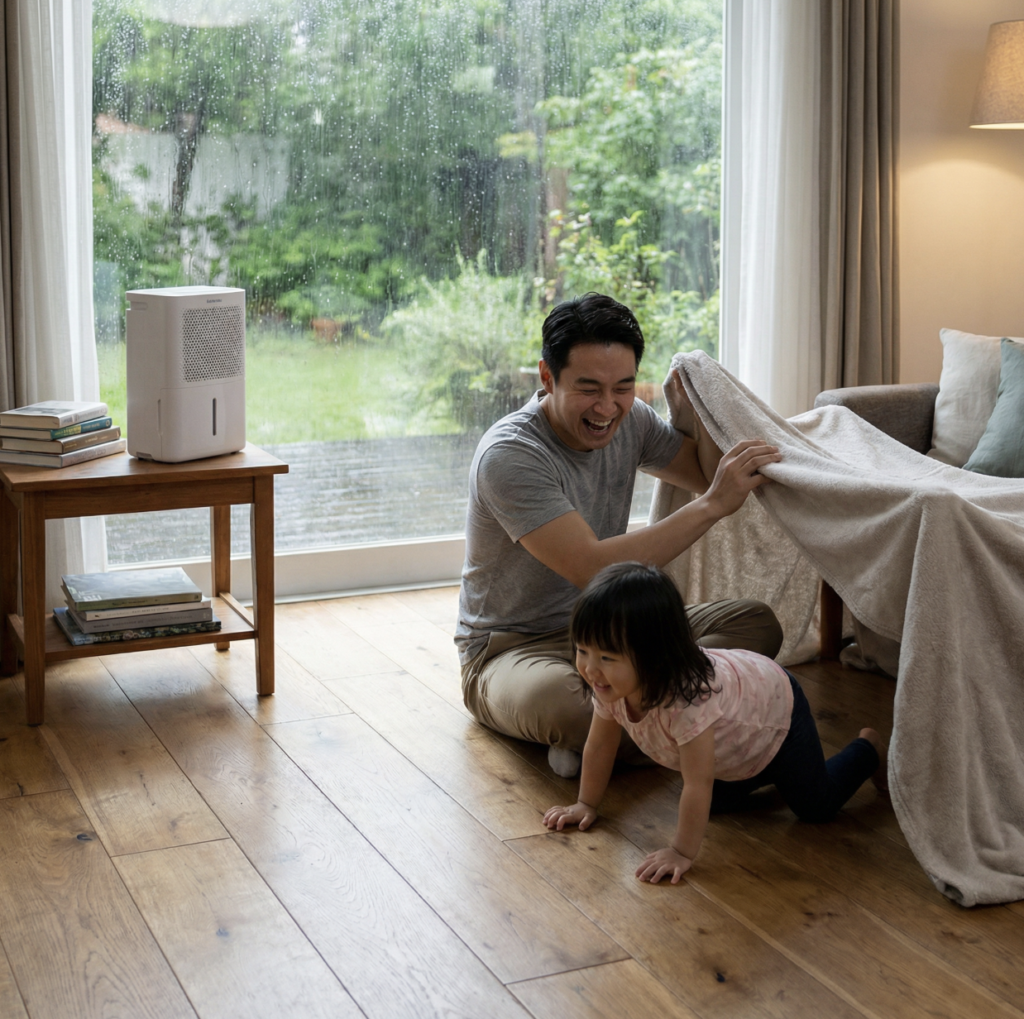
Engineered timber flooring is widely recommended by flooring professionals and industry associations for use in humid and tropical climates. Its layered construction is specifically engineered to handle moisture fluctuations that often cause problems for traditional solid wood floors.
In regions such as Singapore and across Southeast Asia, where humidity levels remain high year-round, engineered timber has proven to be one of the most reliable real-wood flooring solutions. This performance-focused design is why engineered timber forms a key part of the product philosophy at UPI, where climate suitability is treated as essential rather than optional.
Why Humidity Is a Challenge for Wood Flooring
Wood is a natural material that reacts continuously to moisture in the air. When humidity rises, wood absorbs moisture and expands. When humidity drops, it releases moisture and contracts. In humid climates, these constant changes create a cycle of movement that can lead to both visible and structural problems.
Common problems with unsuitable wood flooring include:
- Warping and cupping
- Gaps between planks
- Surface cracking or lifting
Understanding how different flooring materials respond to humidity is essential before committing to any wood-based floor, particularly in tropical or coastal environments.
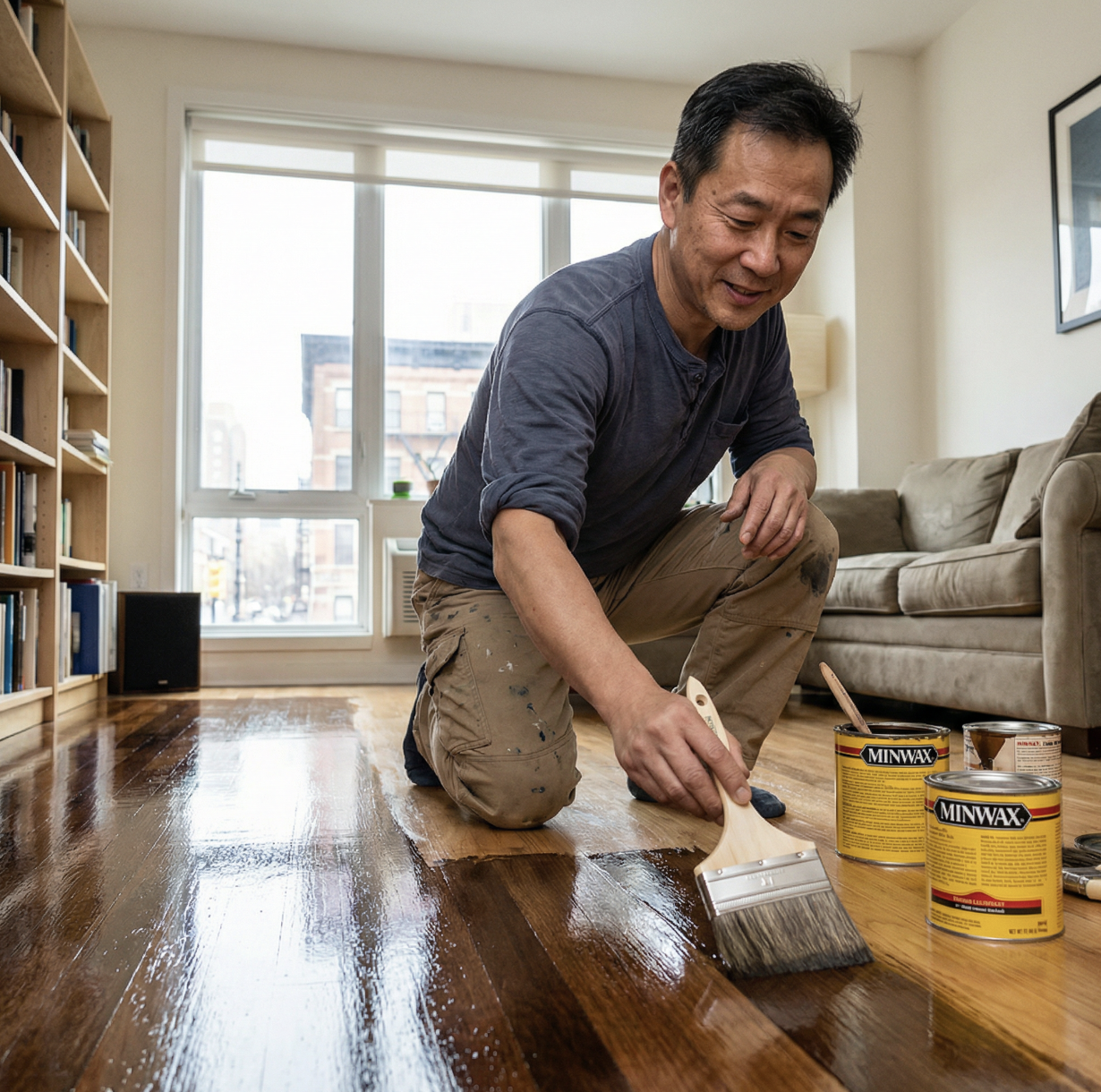
What Makes Engineered Timber Suitable for Humid Climates
Engineered timber is designed to control wood movement through intelligent internal structure. Instead of relying on a single solid piece of wood that moves as one unit, it uses multiple layers bonded together with opposing grain directions. This construction creates a system of internal checks and balances.
This construction offers several performance advantages:
- Cross-grain layers that reduce expansion and contraction
- Strong plywood or HDF core for moisture resistance
- Stable surface even under fluctuating humidity levels
As a result, engineered timber remains far more dimensionally stable than solid wood in tropical environments, making it practical for year-round use without extensive climate control.
Engineered Timber vs Solid Wood in High Humidity
Solid wood flooring performs beautifully in stable, climate-controlled interiors. In humid regions, however, it often requires strict environmental control to avoid long-term issues. Without consistent air conditioning and dehumidification, solid wood can become problematic within months.
Engineered timber offers a more forgiving alternative:
- Better tolerance to moisture and temperature changes
- Lower risk of structural deformation
- Easier installation over concrete subfloors
Whilst solid wood allows more refinishing cycles over its lifetime, engineered timber delivers higher day-to-day reliability in humid climates where consistent performance matters most.
Performance in Kitchens, Living Areas, and Apartments
One of the key advantages of engineered timber is its versatility across different rooms and applications. When properly installed, it can be used successfully in areas where solid wood is traditionally avoided due to moisture concerns.
Typical applications include:
- Living rooms and bedrooms
- Open-plan dining areas
- Apartments with concrete subfloors
With correct moisture testing and appropriate installation methods, engineered timber performs consistently even in spaces with moderate humidity variation throughout the day.
Installation Considerations in Humid Environments
Proper installation plays a major role in how engineered timber performs over time. Industry best practices emphasise preparation and moisture management as non-negotiable steps in the process.
Key installation steps include:
- Acclimating boards for 48 to 72 hours before installation
- Conducting subfloor moisture tests
- Allowing expansion gaps around perimeter walls
Installation methods such as floating or glue-down systems are commonly recommended for humid climates, with the choice depending on specific site conditions, subfloor type, and the level of moisture exposure expected. Professional installation ensures these critical steps are completed correctly.
Importance of Indoor Humidity Control
Although engineered timber is significantly more stable than solid wood, maintaining reasonable indoor humidity still matters for long-term performance. Most flooring manufacturers recommend keeping indoor humidity within a controlled range to optimise the floor’s lifespan.
Best practices include:
- Maintaining indoor humidity between 40 and 60 percent
- Using air conditioning or dehumidifiers when necessary
- Ensuring proper ventilation throughout the home
These measures help preserve both the structural integrity and appearance of engineered timber flooring, extending its life and maintaining its beauty.
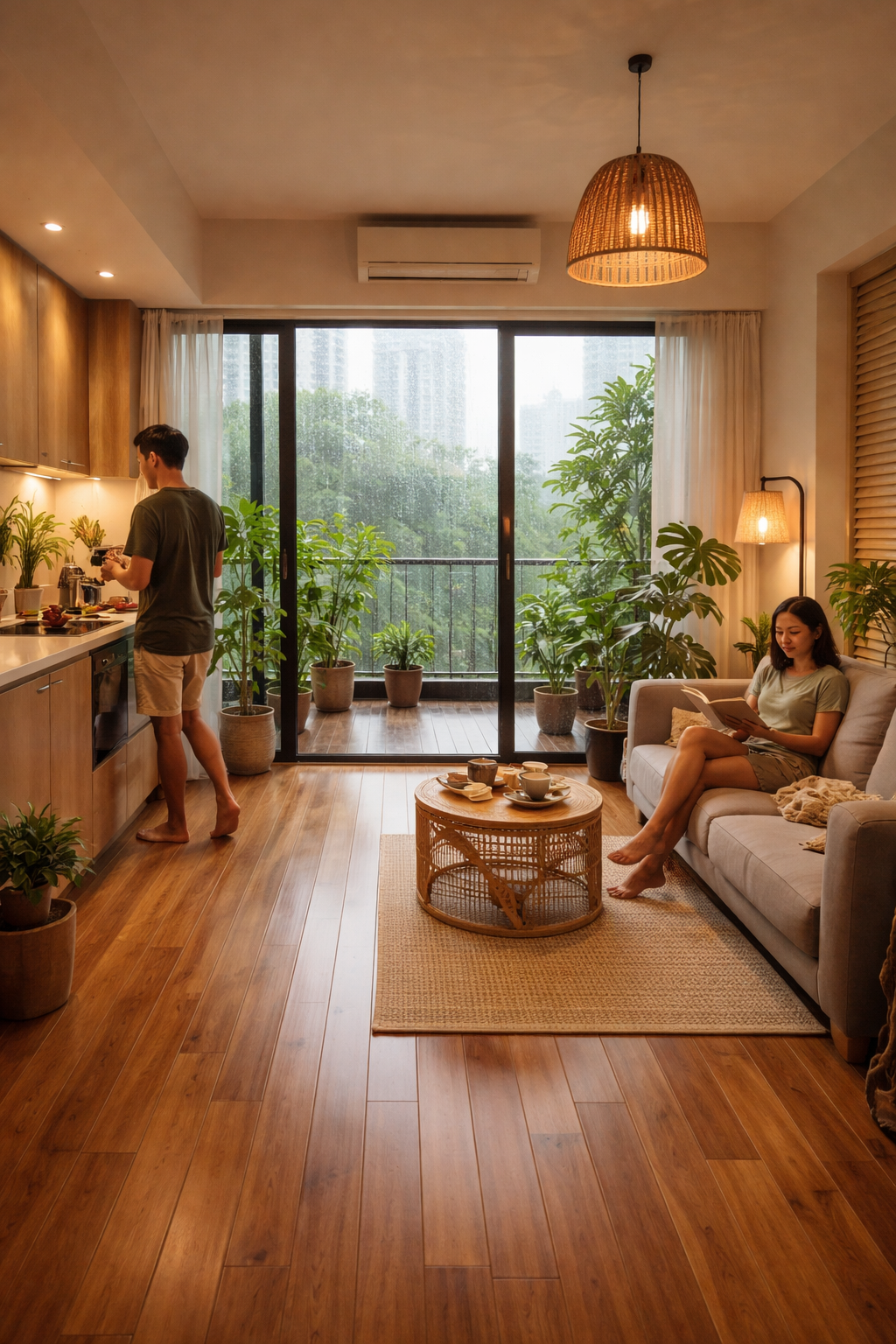
Finishes That Perform Better in Humid Conditions
Surface finishes also affect how engineered timber performs in humid climates. Some finishes allow the wood to breathe more naturally, whilst others offer stronger surface protection against moisture penetration.
Common finish options include:
- UV oil for a natural look and easier spot repair
- Lacquer for higher surface resistance
- Matte finishes to reduce visible wear
Choosing the right finish can enhance durability whilst maintaining your desired aesthetic, making it an important consideration beyond just appearance.
Sustainability and Engineered Timber
Engineered timber is often considered a more sustainable flooring option compared to solid wood. By using thin hardwood veneers over stable cores, manufacturers can maximise the yield from each log, making better use of limited natural resources.
Environmental benefits include:
- Reduced use of slow-growing hardwoods
- More efficient timber utilisation
- Availability of responsibly sourced materials
This approach supports long-term environmental responsibility without compromising on design quality or natural wood aesthetics.
Common Mistakes to Avoid in Humid Climates
Many flooring issues in humid climates arise not from the product itself, but from incorrect planning or installation practices. Being aware of common pitfalls helps ensure successful outcomes.
Common mistakes include:
- Skipping acclimation before installation
- Installing over damp or uneven subfloors
- Ignoring indoor humidity control after installation
Avoiding these errors significantly improves long-term performance and protects your investment.
Conclusion
Engineered timber flooring is one of the most reliable real-wood flooring solutions for humid climates. Its layered construction, moisture resistance, and installation flexibility make it especially suitable for modern homes in tropical regions where solid wood would struggle.
By understanding how humidity affects wood and choosing engineered timber designed specifically for these conditions, homeowners can enjoy the warmth and beauty of natural wood without the risks associated with solid timber flooring. For those seeking a balance of performance, aesthetics, and durability in challenging climates, engineered timber remains a smart and proven choice.
Looking to explore engineered timber options suited to your climate? Contact UPI today to discuss flooring solutions designed for tropical and humid environments.
