
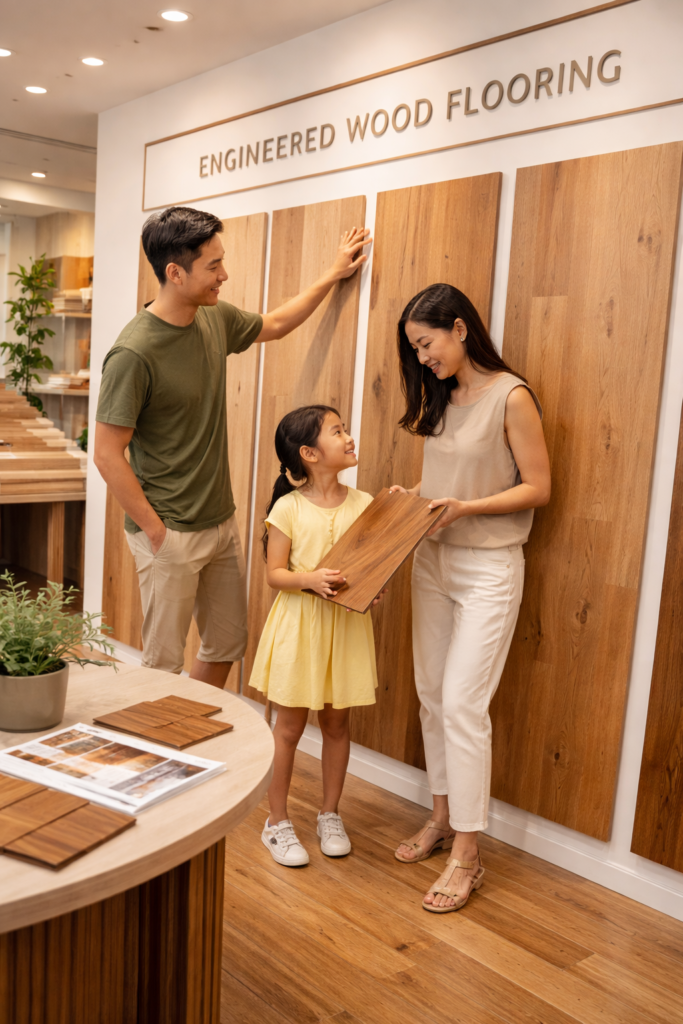
Engineered wood flooring has become a preferred choice for modern homes because it balances natural beauty with structural reliability. Its layered construction is specifically designed to perform consistently in environments where temperature and humidity fluctuate, making it particularly well-suited to challenging climates.
For humid regions such as Singapore and much of Southeast Asia, this type of flooring offers a practical alternative to solid wood. It delivers the warmth and character of real timber whilst significantly reducing the risk of warping, cupping, or excessive movement. At UPI, this understanding of climate-specific performance drives the selection and recommendation of engineered wood solutions, ensuring homeowners receive flooring that truly suits their conditions.
What Is Engineered Wood Flooring?
Engineered wood flooring represents an evolution in flooring technology, designed to overcome the limitations of solid wood whilst preserving its authentic appearance. Understanding its construction helps explain why it performs so reliably.
Core Construction and Layers
Engineered wood flooring is manufactured from multiple layers bonded together to create superior stability. The top layer is genuine hardwood, whilst the core beneath provides structural strength and moisture resistance.
The typical construction includes:
- A natural hardwood veneer on the surface for authentic appearance
- A plywood or HDF core constructed with cross-grain layering
- A wear layer typically between 2 and 6 mm, allowing limited refinishing over time
This cross-layered structure is the fundamental reason engineered wood performs reliably in humid and high-traffic residential settings. Each layer works against the others to prevent the uniform expansion and contraction that causes problems in solid wood.
Types and Variations
Engineered wood flooring comes in several configurations to suit different design and installation needs. Understanding these variations helps homeowners select the right product for their specific situation.
Available configurations include multi-layer and three-layer constructions, each offering different stability characteristics. Installation profiles range from click-lock systems for floating installations to tongue-and-groove profiles for more traditional methods. Surface finishes include UV oil, lacquer, and matte coatings, each offering distinct aesthetics and maintenance requirements.
These variations allow homeowners to choose between ease of installation, surface durability, and aesthetic preference without compromising on fundamental quality. The right combination depends on your specific space and priorities.
Benefits of Engineered Wood Flooring
The benefits of engineered wood flooring extend across performance, aesthetics, and practical ownership. Understanding these advantages helps explain why it has become so widely adopted.
Superior Stability and Durability
One of the most significant advantages of engineered wood flooring is its dimensional stability. The layered construction dramatically reduces the expansion and contraction that affects solid wood, particularly in variable climates.
Key performance advantages include:
- Resistant to warping and cupping in humid conditions
- Suitable for use with underfloor heating systems
- Strong core structure designed for long-term residential use
This stability makes engineered wood especially reliable for apartments, condominiums, and landed homes in tropical climates where solid wood would struggle. The difference becomes increasingly apparent over years of service.
Aesthetic and Installation Advantages
Engineered wood offers the same visual appeal as solid timber because the surface layer is genuine hardwood. Every plank displays authentic grain patterns, natural colour variation, and real wood texture. At the same time, it provides installation flexibility that solid wood cannot match.
Practical advantages include authentic wood grain, colour variation, and texture that only real wood can provide. It’s compatible with both concrete and wooden subfloors, expanding installation possibilities significantly. Multiple installation methods accommodate different site conditions and preferences.
These qualities make it a versatile option for both new builds and renovation projects, adapting to various constraints and requirements with equal effectiveness.
Cost and Maintenance Edge
From a cost perspective, engineered wood flooring often proves more efficient than solid wood, especially when considering long-term ownership rather than just initial purchase price.
The economic advantages include longer lifespan with proper care compared to laminate alternatives, easier daily cleaning compared to untreated solid wood, and more sustainable use of hardwood resources through thin veneers. Many manufacturers also source veneers from responsibly managed forests, aligning with global sustainability standards whilst reducing environmental impact.
Engineered Wood vs Other Flooring Options
Understanding how engineered wood compares to alternatives helps clarify when it represents the best choice for your home.
Engineered Wood vs Solid Wood Flooring
Solid wood is valued for its thickness and refinishing potential, but it presents challenges in humid environments that cannot be ignored. The comparison reveals distinct advantages for each type.
Engineered wood offers superior moisture resistance, making it reliable in variable climates. Installation is faster and more flexible, accommodating various subfloor types. Refinishing capability is limited compared to solid wood, but overall stability is considerably higher.
For many homeowners, particularly in humid regions, stability and ease of ownership outweigh the theoretical advantage of unlimited refinishing cycles. The floor that performs consistently requires less intervention over its lifetime.
Engineered Wood vs Laminate or Vinyl
Laminate and vinyl floors offer practical advantages in terms of cost and durability, but they cannot fully replicate the look and feel of genuine wood. The difference becomes apparent both visually and underfoot.
Engineered wood uses genuine hardwood veneers, not photographic reproductions. It provides natural texture and warmth underfoot that synthetic materials cannot match. The long-term value for living spaces and bedrooms typically exceeds alternatives when quality of life and resale considerations are factored in.
In high-traffic residential areas, engineered wood provides a premium balance between durability and authenticity, delivering real wood benefits without solid wood vulnerabilities.
Installation Guide for Engineered Wood Flooring
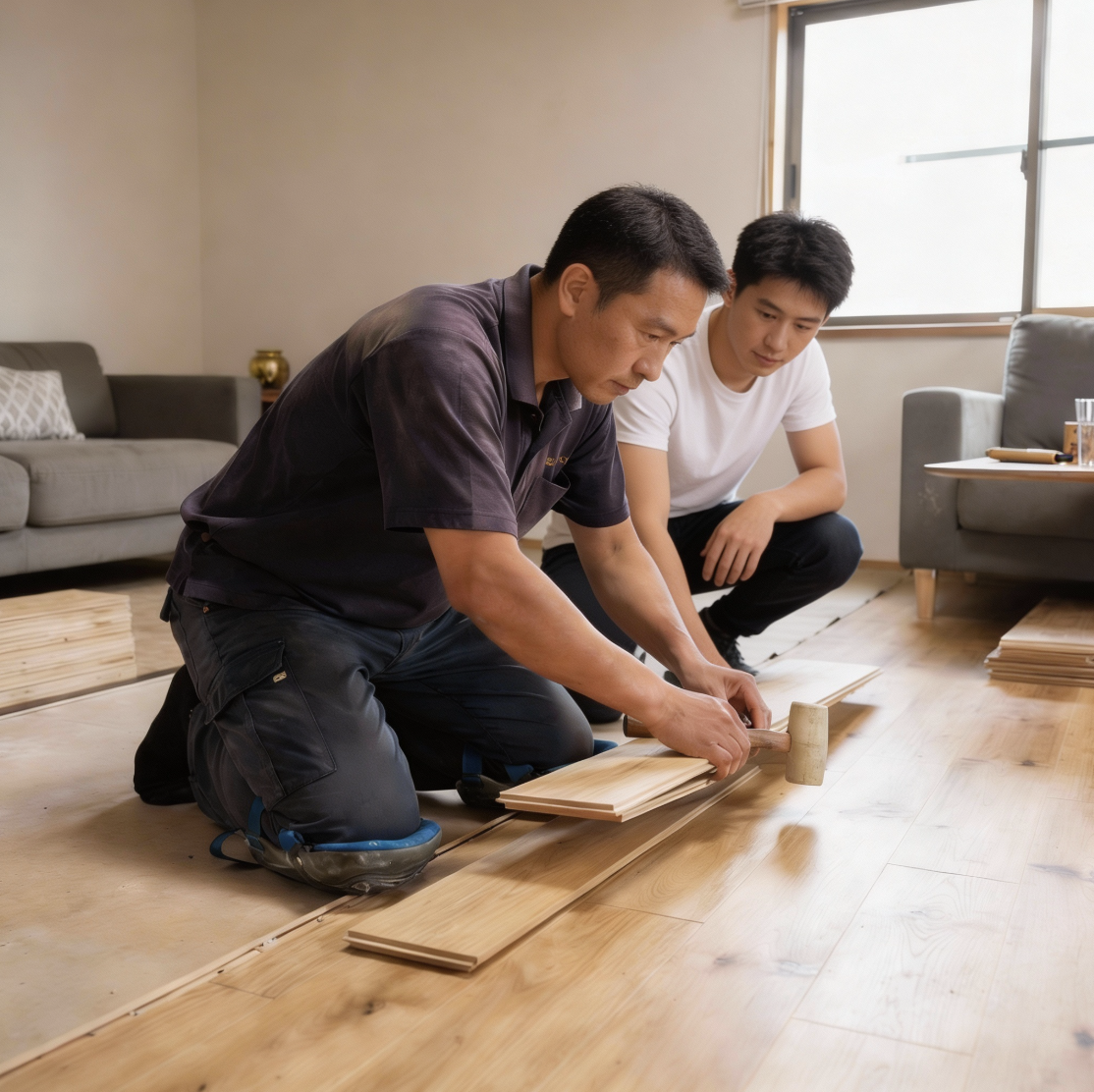
Proper installation determines how well engineered wood flooring performs over its lifetime. Following established best practices prevents common problems.
Preparation Steps
Proper preparation is essential for long-term performance and cannot be skipped or rushed. Industry guidelines emphasise these critical steps.
Essential preparation includes:
- Acclimate boards for 48 to 72 hours in the installation room
- Ensure the subfloor is level and clean
- Conduct moisture testing to meet manufacturer requirements
These steps help prevent post-installation movement and surface issues. The time invested in proper preparation pays dividends throughout the floor’s lifetime.
Installation Methods
Engineered wood can be installed using several proven techniques, each suited to different situations and requirements.
Floating installation with click-lock systems offers speed and flexibility, particularly for renovation projects. Glue-down installation provides enhanced stability and superior sound control, ideal for multi-storey buildings. Nail-down installation over wooden subfloors suits traditional applications where solid fixing is preferred.
The right method depends on subfloor type, room usage, and acoustic requirements. Professional installers can advise which approach best suits your specific circumstances.
Maintenance and Care Practices
Proper maintenance preserves both appearance and performance over decades of use. Engineered wood flooring rewards consistent care with lasting beauty.
Daily and Weekly Cleaning
Routine care helps preserve the finish and appearance of engineered wood flooring without requiring excessive time or specialised products.
Recommended practices include:
- Sweep or vacuum regularly to remove grit
- Damp mop with minimal water
- Use furniture pads and window coverings to reduce wear
Consistent light maintenance prevents surface damage over time and is considerably easier than restoring neglected floors. Small daily efforts prevent large future problems.
Long-Term Upkeep
With proper care, engineered wood flooring can maintain its appearance for decades, performing reliably throughout its service life.
Long-term maintenance considerations include refinishing the wear layer one to three times if thickness allows, maintaining indoor humidity between 40 and 60 percent for optimal stability, and addressing spills promptly to avoid moisture penetration.
These practices are commonly recommended by flooring professionals and manufacturers. Following them protects your investment and maintains the floor’s beauty.
Choosing Engineered Wood Flooring for Your Space
Selecting the right engineered wood involves balancing aesthetic preferences with practical requirements and budget constraints.
Sizing, Species, and Finishes
The dimensions and wood species you choose influence both aesthetics and performance. Understanding the options helps you make informed decisions.
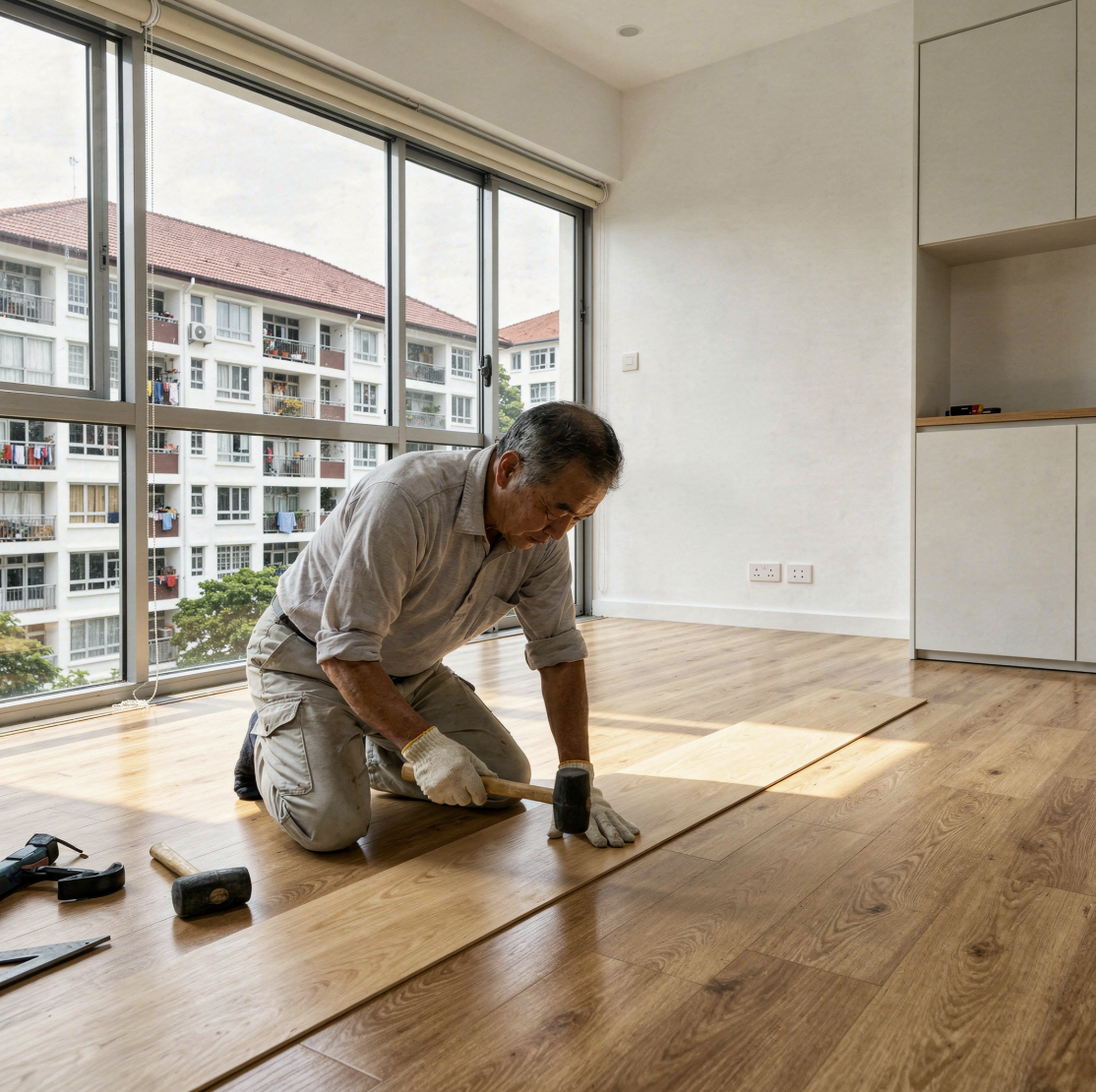
Board widths typically range from 125 to 220 mm, with wider planks creating a more contemporary appearance. Lengths can reach up to 2.5 metres for a seamless look that minimises visible joins. Oak and walnut veneers remain particularly popular for modern Asian interiors, offering timeless appeal and excellent durability.
Matte finishes are especially favoured for their natural appearance and ease of maintenance. They hide minor scratches better than high-gloss alternatives whilst preserving the authentic character of wood.
Cost Factors and Budgeting
Engineered wood flooring generally costs less than solid wood whilst offering comparable visual appeal and superior stability in challenging conditions.
Average installed prices range from SGD 8 to 20 per square foot, with variation based on veneer thickness, core quality, and finish type. Despite the range, engineered wood typically delivers strong return on investment through durability and resale value.
For many homeowners, engineered wood represents a cost-effective long-term choice that balances initial investment with ongoing performance and minimal maintenance requirements.
Common Challenges and Practical Solutions
Like all wood-based materials, engineered flooring requires thoughtful planning to achieve optimal results. Being aware of potential challenges helps you avoid them.
Control indoor humidity to minimise movement, particularly in regions with distinct wet and dry seasons. Balance budget considerations with veneer thickness and core quality, as these directly affect refinishing potential and longevity. Choose trusted suppliers to ensure consistent manufacturing standards and reliable product performance.
Addressing these factors early in the selection process helps avoid common issues after installation, ensuring satisfaction throughout the floor’s lifetime.
Conclusion and Next Steps
Engineered wood flooring combines genuine wood beauty with advanced structural design. Its stability, versatility, and refined appearance make it an ideal solution for modern homes, especially in humid climates where solid wood would struggle.
If you’re looking for flooring that delivers lasting performance without compromising on style, engineered wood represents a smart investment in your home’s comfort and value. The balance of authenticity, stability, and practicality suits modern lifestyles and challenging climates equally well.
Ready to explore engineered wood options for your home? Contact UPI today to discover collections designed for real-world performance in Singapore’s tropical climate.
