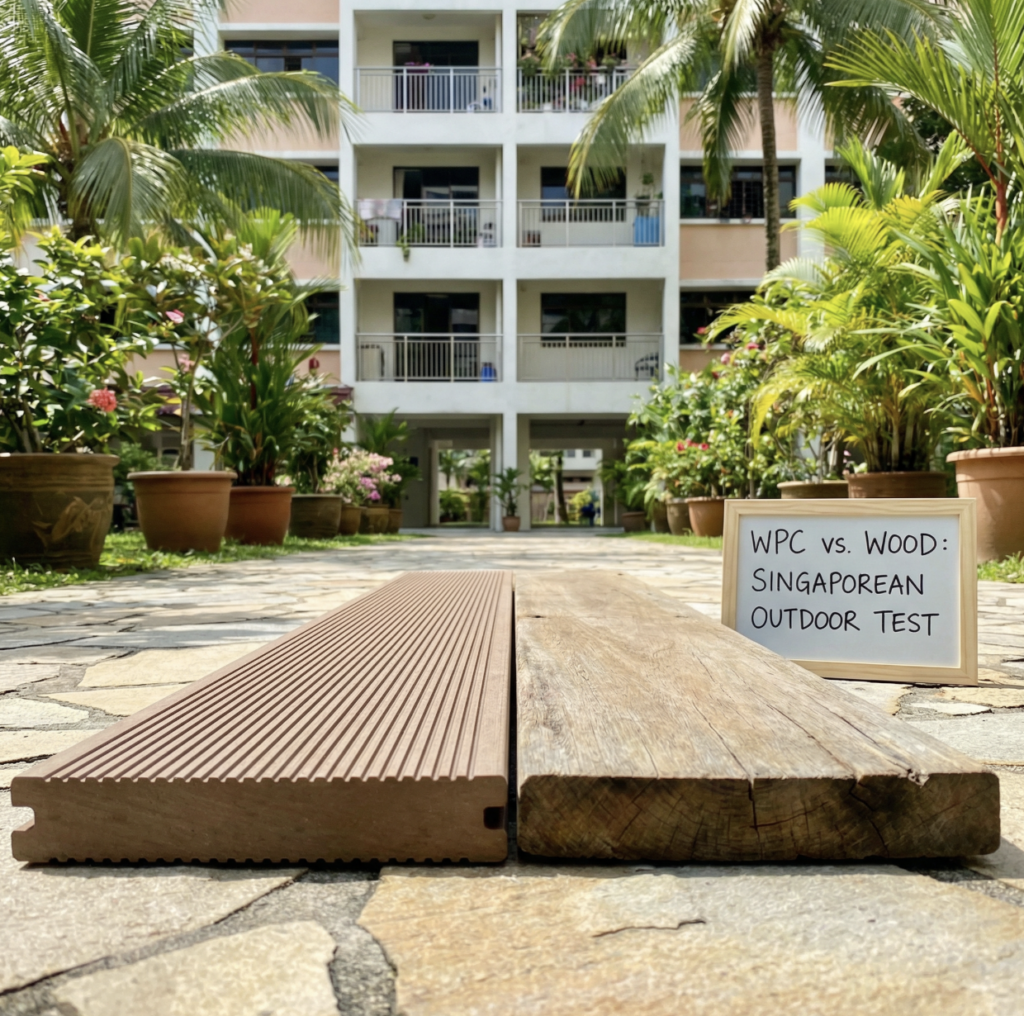
When planning an outdoor deck in tropical climates like Singapore, material choice significantly impacts durability, safety, maintenance requirements, and long-term cost. The two most common options are traditional wood decking and WPC (wood plastic composite) decking.
Both materials have their place in outdoor design, but they perform very differently under sustained tropical conditions. High humidity, intense UV exposure, and frequent rainfall create challenges that test outdoor materials continuously. This guide compares WPC and wood decking practically, helping you determine which suits your home, lifestyle, and climate. At UPI, these performance considerations guide every outdoor decking recommendation, ensuring materials are matched to real-world conditions rather than ideal scenarios.
What Is WPC Decking and What Is Wood Decking?
Understanding the fundamental differences between these materials helps explain their contrasting performance characteristics.
Wood decking is manufactured from natural timber such as teak, chengal, or merbau. It’s valued for its authentic appearance, natural grain variation, and traditional aesthetic that many homeowners find appealing.
WPC decking is manufactured from a blend of wood fibres and plastic polymers. It’s engineered to replicate wood’s appearance whilst dramatically improving resistance to moisture, insects, and weathering that typically degrades natural timber.
Both are commonly used for balconies, patios, pool decks, and gardens, but their performance differs substantially in tropical climates where conditions are consistently challenging.
Durability and Lifespan
Durability represents one of the most significant differences between these materials, particularly in tropical environments.
Wood decking durability depends heavily on timber species and maintenance consistency. Even premium hardwood remains vulnerable to moisture absorption, UV exposure, termites, and fungal growth. Without regular care, wood inevitably cracks, warps, rots, or splinters.
WPC decking is designed for outdoor durability under challenging conditions.
Key durability differences include:
- Wood decking typically lasts 10 to 15 years with proper maintenance
- WPC decking commonly lasts 25 years or more
- WPC does not rot, crack, or splinter
- WPC is resistant to termites and insects
In tropical environments, WPC consistently outperforms wood over the long term.
Maintenance Requirements
Maintenance demands are often underestimated when choosing outdoor decking, yet they significantly affect long-term satisfaction and total ownership cost.
Wood decking requires ongoing care to remain in good condition. This isn’t occasional attention, it’s a continuous commitment. Typical maintenance includes regular cleaning to prevent mould accumulation, periodic sanding and refinishing to address surface degradation, sealing or oiling for moisture protection, and pest treatment to prevent structural damage.
WPC decking is considerably easier to maintain. The routine typically involves only occasional washing with water. No sanding, staining, sealing, or chemical treatments are necessary.
For homeowners who want an outdoor space that functions rather than demands constant attention, WPC offers a clear and substantial advantage. The time and cost savings accumulate significantly over the years.
Performance in Wet and Humid Conditions
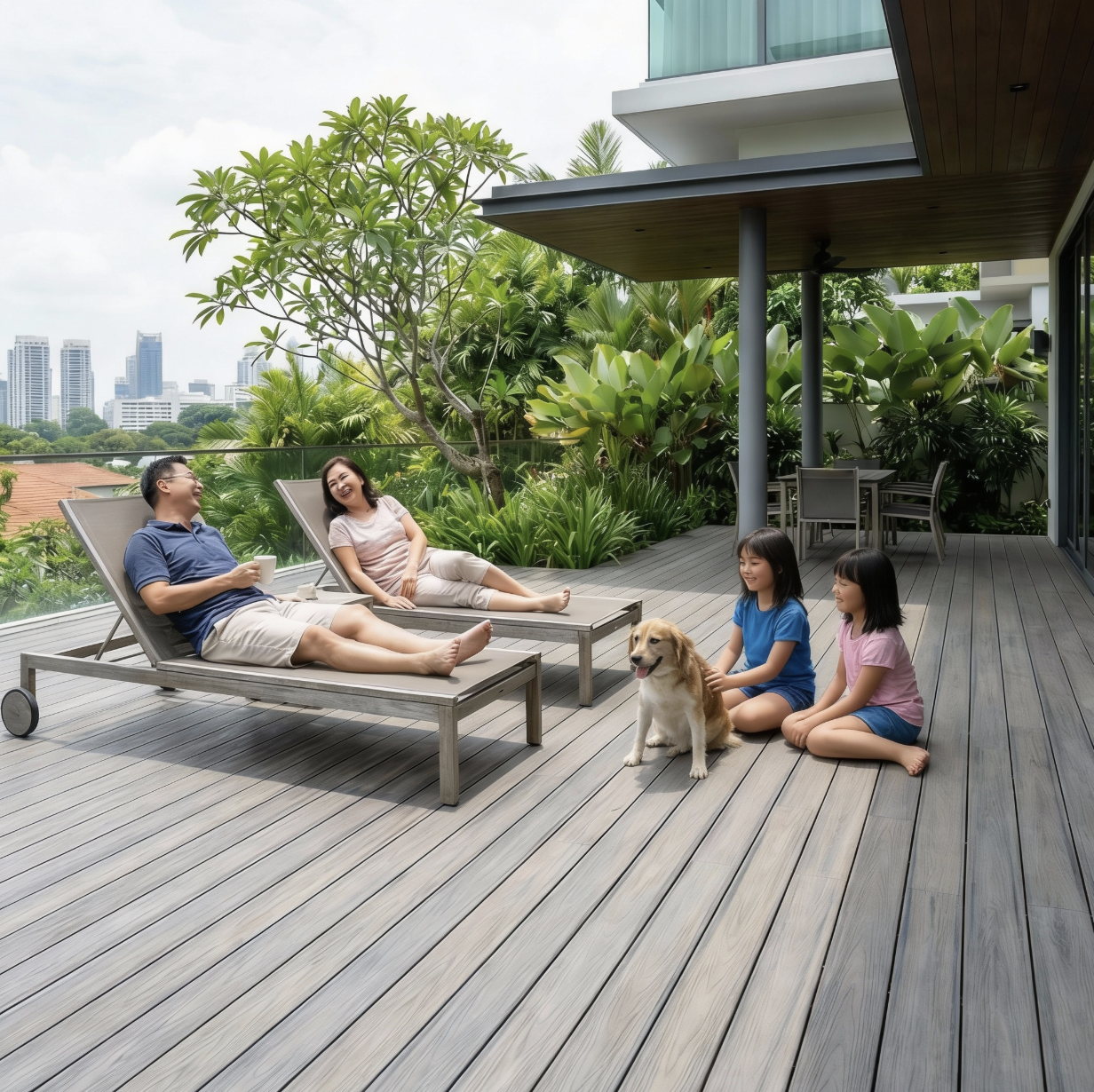
Outdoor decks in Singapore face rain, humidity, and heat year-round. This constant moisture exposure creates challenges that materials must successfully manage.
Wood decking absorbs moisture readily, leading to swelling, warping, and long-term structural damage. The expansion and contraction cycle never stops in tropical climates. Wet wood surfaces also become slippery and unsafe, particularly around pools.
WPC decking demonstrates very low water absorption due to its plastic polymer content. The material resists moisture penetration that destroys wood over time. In wet conditions, WPC maintains its shape and dimensions, slip-resistant textures improve safety during and after rain, and mould growth is substantially reduced.
These characteristics make WPC especially suitable for pool decks, balconies, and uncovered outdoor areas where moisture exposure is constant.
Safety and Comfort Underfoot
Safety is critical for outdoor spaces used by families, children, and pets.
Wood decking can splinter as it ages, particularly under constant sun and rain. Wet timber also becomes slippery, creating fall risks.
WPC decking is designed with safety as a primary consideration.
Safety benefits include:
- Splinter-free surfaces throughout its lifetime
- Slip-resistant textures even when wet
- Stable boards that do not crack or lift easily
For barefoot use around pools or gardens, WPC offers greater peace of mind.
Aesthetic Appeal and Design Flexibility
Wood decking offers a natural appearance that many homeowners genuinely appreciate. Each plank displays unique grain patterns and colour variation, creating a warm and organic feel. However, wood changes colour over time, fading or weathering unevenly depending on sun exposure and moisture levels.
WPC decking provides consistent appearance with deliberate uniformity. The manufacturing process ensures planks match closely, creating clean visual lines.
Design advantages include:
- Consistent colour and finish across the entire installation
- Wide range of tones from timber-look to modern grey
- Better colour stability under UV exposure
For homeowners preferring a clean, contemporary look with minimal change over time, WPC is often preferred. The deck looks essentially the same years later, whilst wood inevitably transforms in appearance.
Environmental Considerations
Wood decking can be sustainable when responsibly sourced, but often requires chemical treatments to survive outdoors.
WPC decking incorporates recycled materials. Environmental benefits include reduced demand for virgin timber, use of recycled wood fibres and plastics, and no need for chemical preservatives.
From a sustainability perspective, WPC offers a more resource-efficient solution.
Cost: Short-Term vs Long-Term Value
Initial cost represents only part of the total ownership equation. Understanding lifetime costs provides a more accurate comparison.
Wood decking usually has lower upfront cost, making it initially attractive. However, long-term expenses accumulate steadily through maintenance requirements, repairs, and earlier replacement. These costs often exceed the initial material savings.
WPC decking typically costs more initially but delivers superior long-term value through lower lifetime maintenance costs, longer usable lifespan, and fewer repairs and replacements.
Over 20 to 25 years, WPC often proves more cost-effective despite higher initial investment. The total ownership cost frequently favours WPC substantially.
Which Should You Choose?
Choosing between WPC and wood decking depends entirely on your priorities, circumstances, and expectations for your outdoor space.
Wood decking suits those who value natural timber aesthetics above all other considerations, are genuinely comfortable with regular maintenance commitments, and prefer traditional outdoor design that evolves naturally over time.
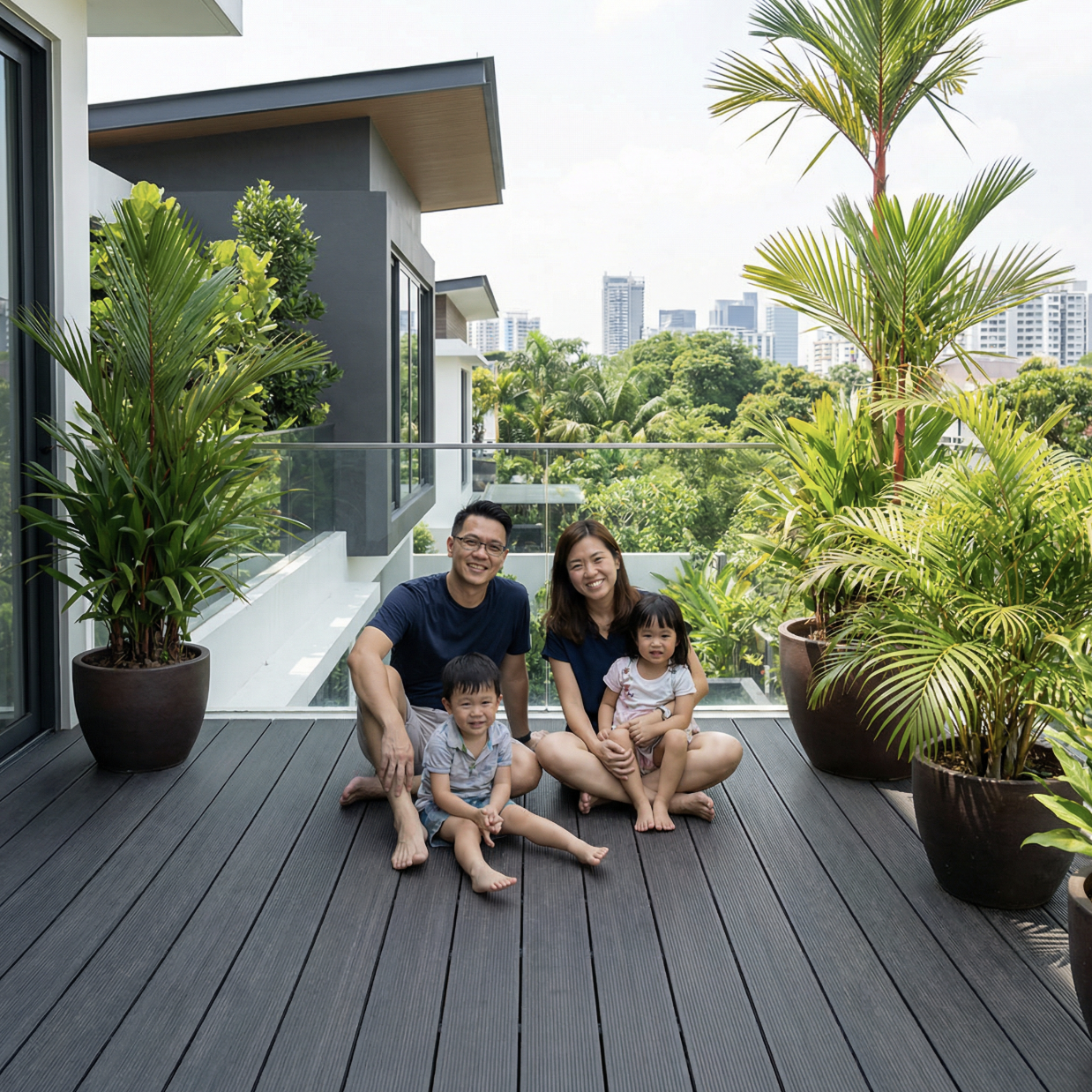
WPC decking is ideal for those wanting reliable durability in tropical weather without constant intervention, preferring low maintenance that doesn’t consume time, needing better safety and moisture resistance for family use, and wanting consistent appearance over time.
For most modern homes in tropical climates, WPC delivers better performance, safety, and long-term value. The practical advantages typically outweigh aesthetic compromises for families who use their outdoor spaces regularly.
Conclusion
When comparing WPC and wood decking for outdoor use, the differences become clear under tropical conditions. Wood offers natural beauty but demands continuous care and carries higher long-term risk in humid climates. WPC is engineered for outdoor durability, safety, and convenience.
For homeowners seeking outdoor spaces that last with minimal upkeep and reliable performance in tropical weather, WPC increasingly represents the smarter choice.
Ready to build an outdoor deck that performs as well as it looks? Contact UPI today to explore WPC decking solutions engineered for Singapore’s tropical climate.
