
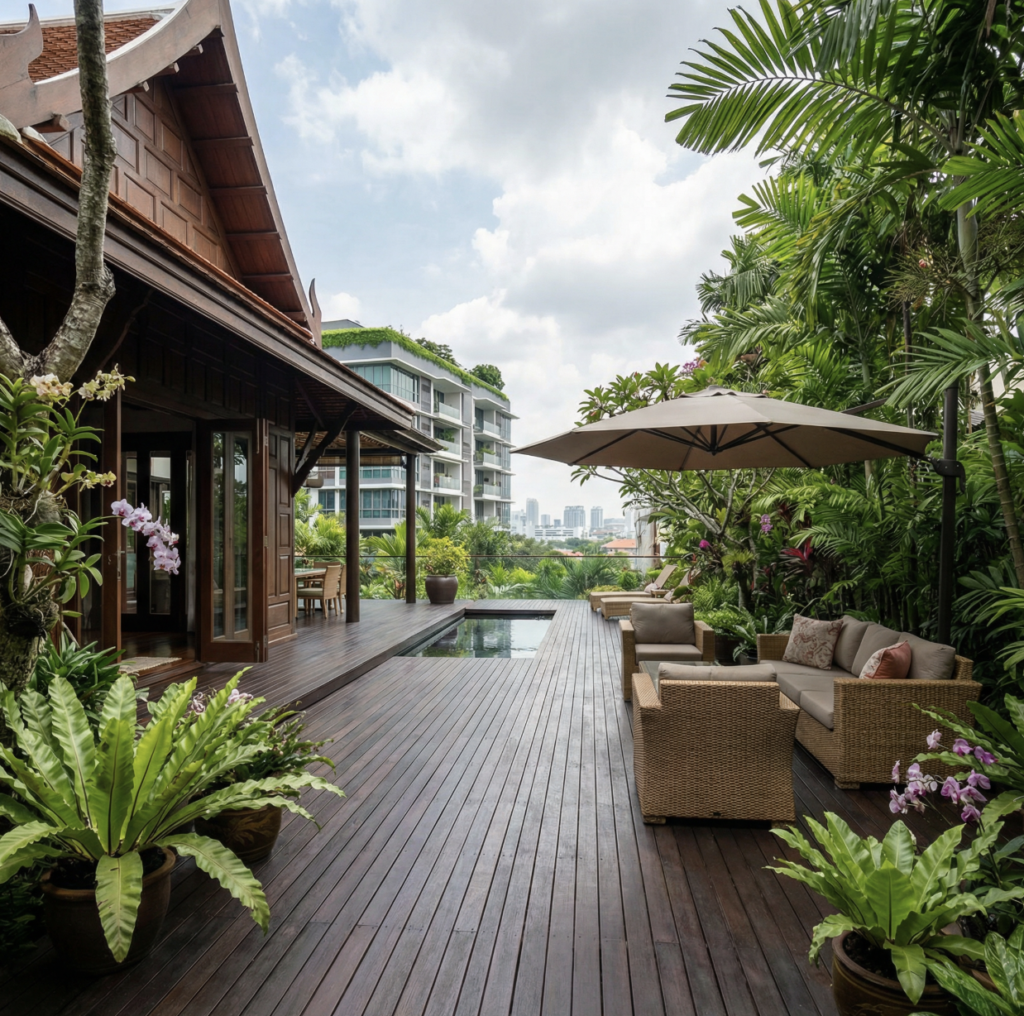
Designing an outdoor deck in a tropical climate like Singapore presents entirely different challenges than in cooler, drier regions. High humidity, intense UV exposure, and frequent rainfall place constant stress on outdoor materials. Without careful selection, even expensive decking can warp, fade, or become unsafe within a few years.
This guide examines the best outdoor decking options for tropical weather, which materials deliver the most reliable performance, and how homeowners can create outdoor spaces built to last. Understanding these climate-specific requirements is essential to making choices that deliver both beauty and long-term value. At UPI Singapore, these same performance principles guide every outdoor decking solution, ensuring climate suitability is built in from the start.
Why Tropical Weather Is Tough on Outdoor Decking
Tropical climates expose decking materials to three primary challenges: moisture, heat, and biological activity. Materials designed for temperate climates often fail quickly because they lack the resilience these conditions demand.
Common issues with unsuitable decking include:
- Warping and cupping due to constant humidity
- Cracking and fading from strong UV exposure
- Mould, mildew, and termite infestation
- Slippery surfaces during and after rain
A successful outdoor deck in Singapore must resist all of these factors simultaneously, not just one or two. This requirement immediately rules out many standard decking materials used in other parts of the world.
Key Requirements for Outdoor Decking in Tropical Climates
Before selecting a decking material, it helps to understand what truly matters in tropical environments. Performance must take priority over appearance when the deck is expected to last without constant intervention.
The most critical requirements include:
- High moisture resistance to prevent swelling and rot
- UV stability to reduce fading and surface breakdown
- Slip resistance for safety during wet conditions
- Resistance to termites, mould, and algae
- Low maintenance requirements due to year-round exposure
Materials that fail in any of these areas typically require frequent repairs or early replacement, turning an initial cost saving into a long-term expense.
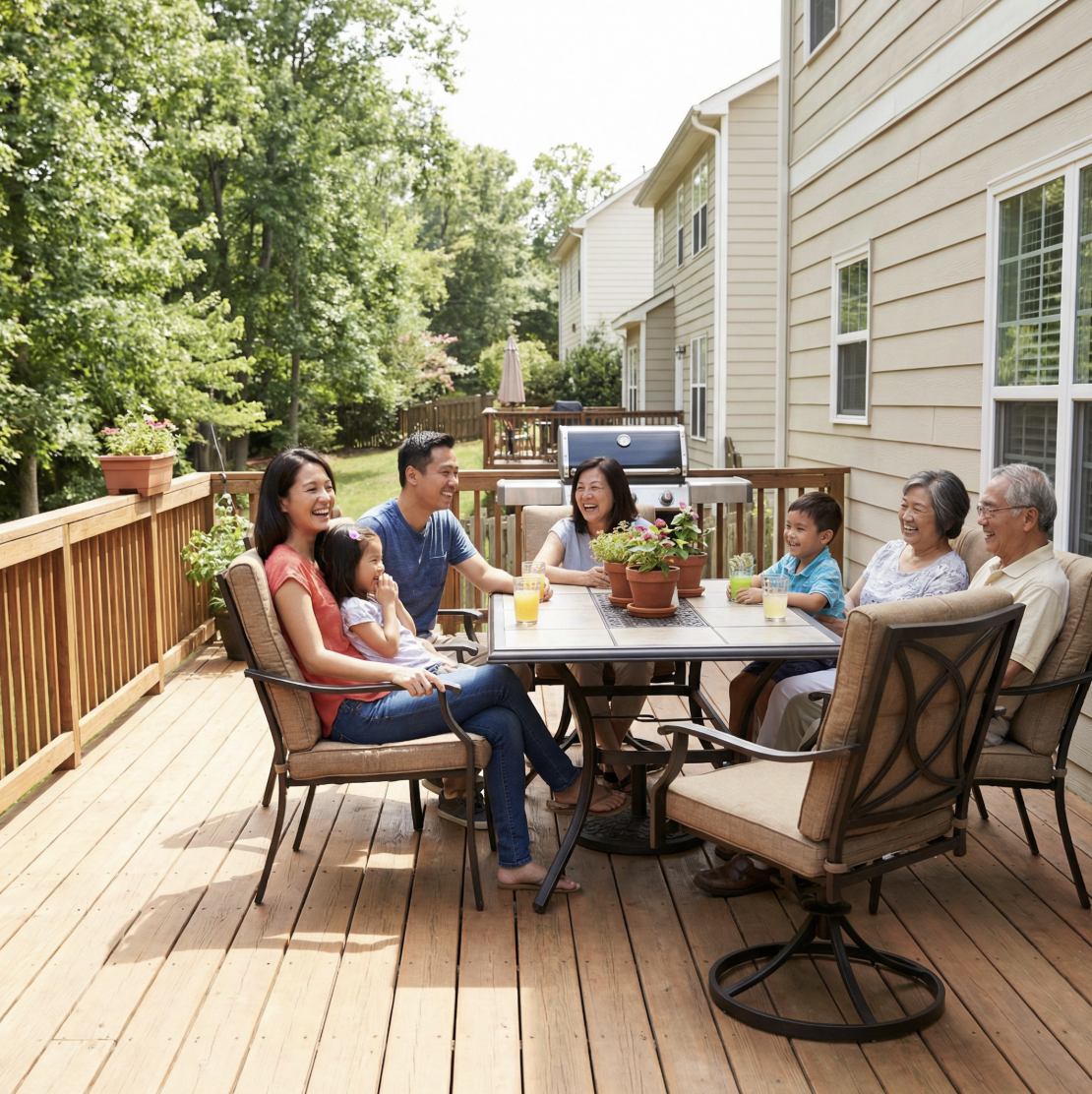
Composite Decking: The Most Reliable Option for Singapore
Composite decking has become the preferred choice for tropical climates, particularly in Singapore. It is engineered specifically to overcome the inherent weaknesses of natural timber in outdoor environments.
Composite decking is typically manufactured from a blend of recycled wood fibres and polymer resins. This structure delivers the visual appeal of wood with significantly superior performance characteristics.
Key advantages of composite decking include:
- Excellent resistance to moisture and humidity
- No splintering, cracking, or rotting
- High slip resistance, even when wet
- Minimal fading due to UV-stabilised surfaces
- No need for sanding, oiling, or varnishing
For balconies, pool decks, patios, and roof terraces, composite decking consistently delivers the most reliable long-term results. It performs predictably regardless of how severe the weather becomes.
Natural Timber Decking: When Chosen Carefully
Natural timber can still perform adequately in tropical climates, but only when the right species are selected and proper maintenance is accepted as an ongoing commitment.
Hardwoods traditionally used for tropical decking include:
- Teak, valued for natural oils that repel moisture and insects
- Chengal, widely used in Southeast Asia for its durability
- Accoya, a modified timber with exceptional dimensional stability
- Ironwood and Merbau, prized for density and strength
Whilst these woods offer inherent durability, they require regular oiling, inspection, and surface treatment to maintain both appearance and performance. Without consistent maintenance, even the best timber will degrade under tropical conditions. This maintenance requirement is not occasional, it is ongoing and essential.
Composite vs Timber Decking in Tropical Weather
When comparing composite and timber decking for Singapore conditions, the practical differences become increasingly apparent over time.
Composite decking generally offers longer lifespan with reduced maintenance, better resistance to humidity and UV exposure, and more consistent appearance throughout the years. The material performs reliably without requiring regular intervention, making it suitable for homeowners who want outdoor spaces that function rather than require constant attention.
Timber decking offers natural variation and traditional aesthetics that many find appealing. However, it comes with higher maintenance requirements and greater sensitivity to weather changes. The beauty of natural wood demands ongoing care to preserve, and this care cannot be postponed without consequences.
For homeowners prioritising long-term performance and convenience, composite decking typically proves the better choice. For those who appreciate natural timber aesthetics and accept the maintenance commitment, quality hardwoods remain viable.
Safety Considerations for Outdoor Decking
Safety is frequently overlooked during the selection process, especially for families with children or elderly residents. In tropical climates, wet surfaces are not occasional hazards, they are daily realities.
Decking designed for outdoor tropical use should provide:
- Textured or embossed surfaces for slip resistance
- Splinter-free finishes to protect bare feet
- Stable boards that do not lift or crack over time
These features become especially important around pools, gardens, and balconies where people walk barefoot and where water accumulation is common. A beautiful deck that presents safety hazards is ultimately a liability rather than an asset.
Maintenance Expectations in a Tropical Environment
Outdoor decks in Singapore face exposure every single day, not seasonally. This continuous exposure makes maintenance planning essential from the beginning, not something to consider later.
Composite decking requires minimal maintenance. Occasional washing with water removes accumulated dirt and debris. No sealing, staining, or sanding is needed. No chemical treatments for pests are required. The material maintains its integrity and appearance with minimal intervention.
Timber decking demands considerably more attention. Regular oiling or sealing protects the surface from moisture penetration. Periodic inspections for rot and termites catch problems before they become severe. Surface refinishing manages weathering and maintains appearance. This maintenance schedule cannot be ignored without risking the deck’s structural integrity.
Understanding this fundamental difference helps homeowners avoid unexpected long-term costs and disappointment. The initial material cost difference often becomes insignificant when measured against years of maintenance expenses.
Choosing the Right Decking for Your Outdoor Space
Each outdoor area presents different demands and constraints. Matching the decking material to the specific space improves both performance and comfort whilst avoiding unnecessary complications.
Balconies and rooftops benefit from lightweight, stable composite decking with UV-resistant finishes that withstand direct sun exposure without degrading.
Poolside decks require high slip resistance for wet foot traffic and strong moisture protection to handle constant water exposure without deterioration.
Garden and patio decks can accommodate composite decking for low maintenance convenience, or selected hardwoods if natural aesthetics are prioritised and maintenance commitment is realistic.
A site-specific approach consistently delivers better results than attempting to use the same solution everywhere. Consider the specific conditions, usage patterns, and maintenance capacity for each space individually.
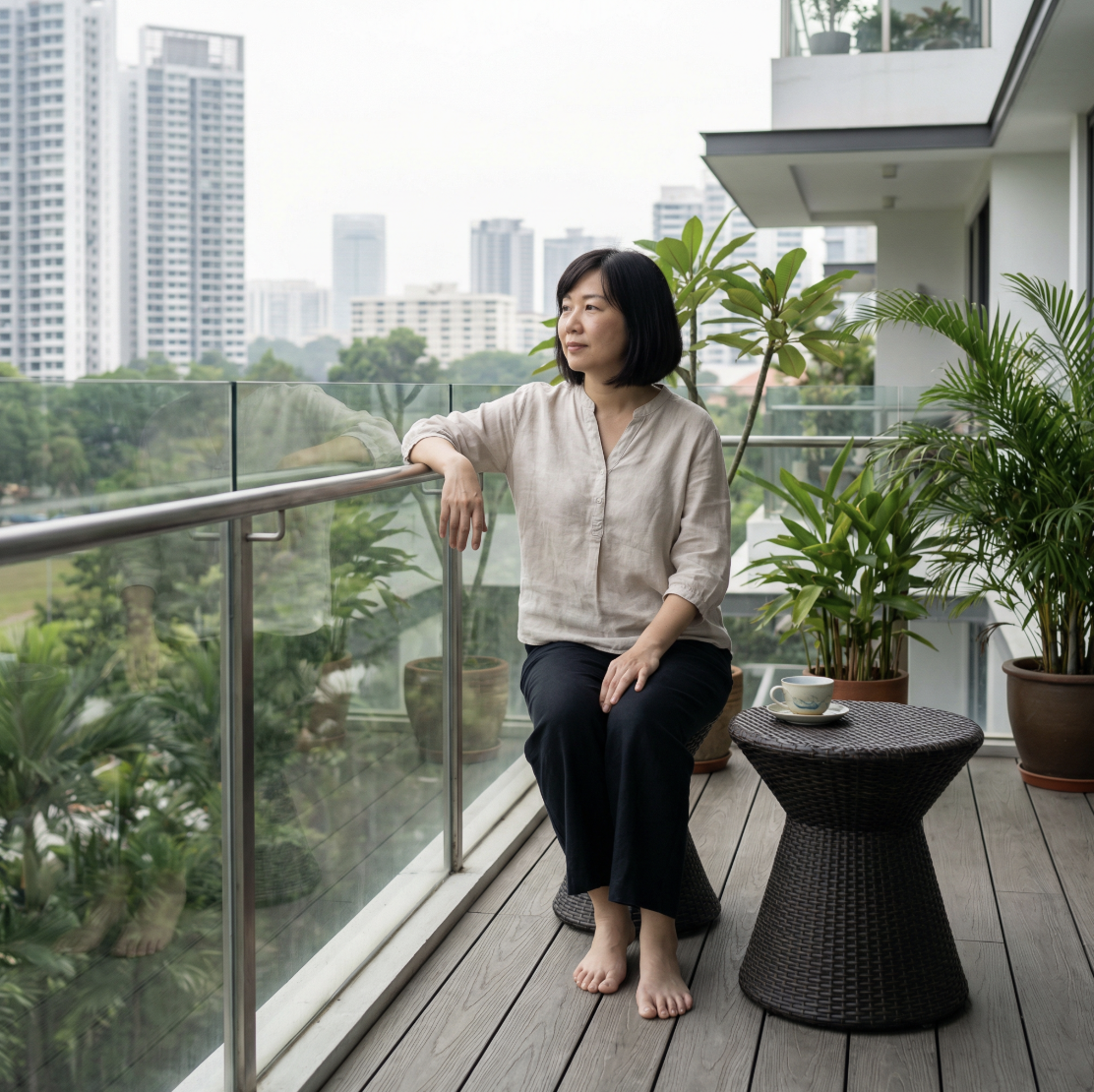
Conclusion
Outdoor decking for tropical weather requires materials that are engineered, tested, and proven to perform under constant heat, humidity, and rain. In climates like Singapore, composite decking has emerged as the most reliable solution, offering safety, durability, and low maintenance without compromising on aesthetics.
Natural timber remains an option for those willing to invest in ongoing care, but for most modern homes, composite decking provides superior long-term value and peace of mind. When outdoor spaces are designed with climate performance in mind from the beginning, they become genuine extensions of the home that remain comfortable, safe, and visually appealing for years to come.
Ready to create an outdoor space that performs as well as it looks? Contact UPI today to discuss decking solutions engineered for Singapore’s tropical climate.
