
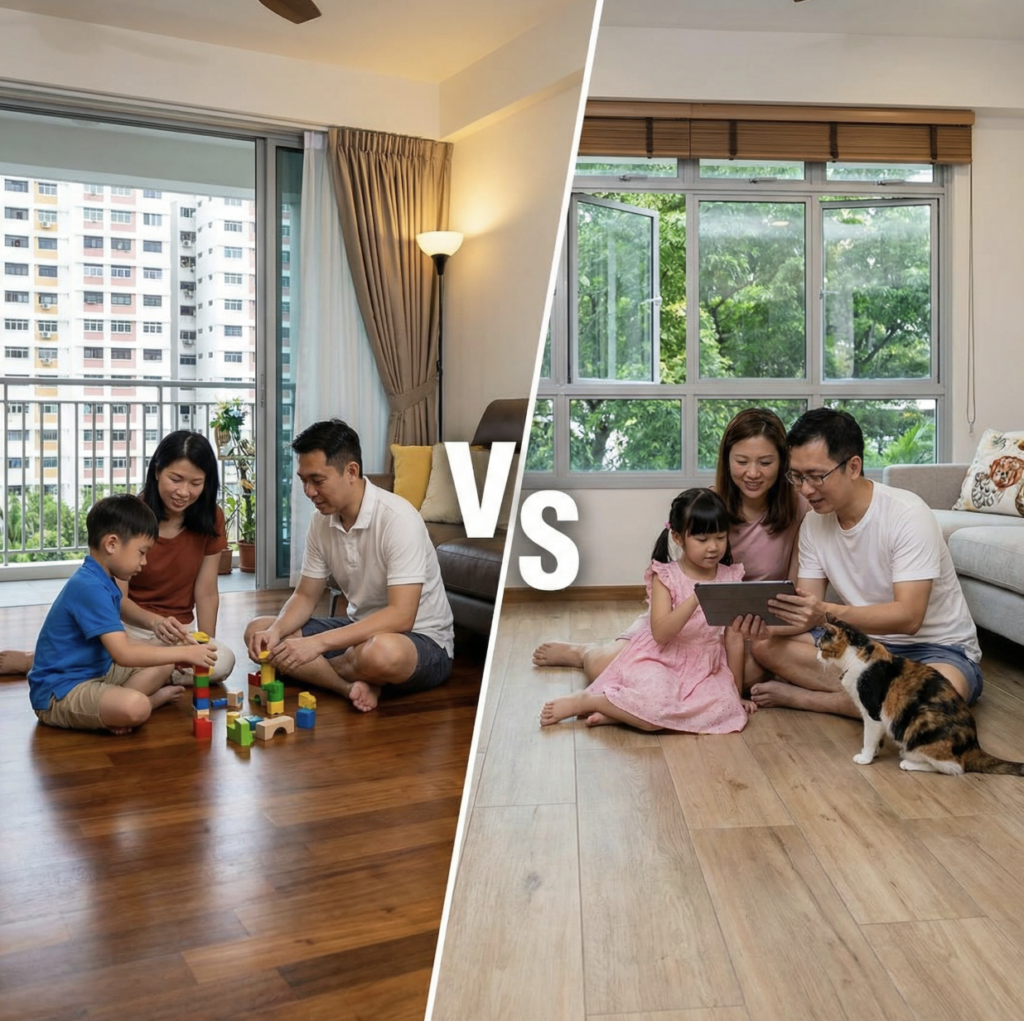
Choosing between solid wood flooring and engineered flooring is one of the most common decisions homeowners face when planning a renovation or new build. On the surface, both options look remarkably similar. Beneath that surface, however, their structure, performance, and long-term value differ in significant ways.
This guide breaks down the genuine pros and cons of solid wood and engineered flooring, helping you decide which option fits your space, climate, and lifestyle best. These considerations become especially important for modern homes in humid regions, where performance matters as much as aesthetics. At UPI Singapore, this understanding forms the foundation of every flooring recommendation, ensuring the right material is matched to real-world conditions.
Understanding the Core Difference
The fundamental difference between solid wood and engineered flooring lies in how each plank is constructed, and this structural distinction shapes everything else.
Solid wood flooring is milled from a single piece of natural timber. Each plank is the same wood from top to bottom, giving it thickness, weight, and the ability to be refinished many times over its lifespan.
Engineered flooring uses a real hardwood veneer on the surface, bonded to multiple layers of plywood or high-density fibreboard beneath. These layers are arranged in opposing grain directions to improve stability and resist moisture-related movement.
This structural difference influences almost every performance factor, from moisture resistance to installation methods to long-term maintenance requirements.
Appearance and Aesthetic Appeal
From a visual standpoint, both flooring types deliver the warmth and character of real wood. Grain patterns, colour variation, and natural texture come from genuine timber in both cases, making them equally authentic in appearance.
Solid wood typically offers a wider range of species, stains, and custom finishes, particularly when unfinished boards are site-finished. This flexibility appeals to those seeking highly specific aesthetics or traditional installation methods.
Engineered flooring, on the other hand, is often sold prefinished and tends to favour wider planks and subtle bevelled edges, which suit contemporary interiors particularly well. In real-world use, most people cannot visually distinguish high-quality engineered flooring from solid wood once installed. The difference is structural, not visual.

Pros and Cons of Solid Wood Flooring
Solid wood flooring is often regarded as the traditional, premium option. It offers genuine long-term value but requires careful consideration, especially in humid climates.
Pros of solid wood flooring:
- Can be sanded and refinished many times
- Extremely long lifespan, often several decades or more
- Strong resale appeal and perceived prestige
- Wide variety of species, colours, and finishes
Cons of solid wood flooring:
- Sensitive to moisture and humidity changes
- Higher material and installation costs
- Professional installation is usually required
- Not ideal for concrete subfloors or humid environments
Solid wood performs best in climate-controlled homes with stable indoor conditions. When these conditions cannot be maintained, its performance becomes unpredictable.
Pros and Cons of Engineered Flooring
Engineered flooring was developed to solve many of the practical limitations of solid wood whilst preserving its natural appearance and authentic feel.
Pros of engineered flooring:
- Greater dimensional stability in humid conditions
- Suitable for installation over concrete subfloors
- Easier and faster installation options
- More cost-effective than solid wood
- Real wood surface with authentic texture
Cons of engineered flooring:
- Limited number of refinishing cycles
- Lifespan depends on veneer thickness and core quality
- Lower prestige perception for some buyers
For most modern homes, particularly those in variable climates or with concrete subfloors, engineered flooring offers a more forgiving and adaptable solution.
Moisture Resistance and Climate Performance
Moisture is one of the most critical factors when choosing wood flooring, yet it’s often underestimated during the selection process. Solid wood expands and contracts along the same grain direction, which increases the risk of cupping, warping, and gaps in humid environments. These movements are natural but can become problematic when humidity fluctuates significantly.
Engineered flooring performs considerably better because its cross-layered core restricts movement caused by humidity changes. The opposing grain directions create internal stability that solid wood simply cannot match.
Important considerations:
- Engineered flooring is more moisture resistant, not waterproof
- Solid wood should be avoided in high-humidity or slab-on-concrete homes
- Neither option is recommended for bathrooms or wet areas
In tropical or coastal climates, engineered flooring is generally the safer and more reliable choice. The difference in performance becomes increasingly apparent over time.
Durability, Lifespan, and Refinishing
Durability depends significantly on how the floor is used and maintained over time, but the material structure sets the baseline potential.
Solid wood flooring can last generations because it can be deeply sanded and refinished multiple times. Even with heavy wear, the entire thickness can be renewed. Engineered flooring typically lasts 20 to 30 years, depending on the thickness of its wear layer. Quality engineered floors with thicker veneers can be refinished once or twice, extending their useful life.
Key differences:
- Solid wood supports multiple full sandings
- Engineered flooring supports one to three light refinishes
- Factory-finished surfaces on both types are highly durable
If long-term renewal is a priority and you expect to stay in your home for decades, solid wood has a clear advantage. If stability and lower maintenance risk matter more, engineered flooring often proves the better choice.
Installation Flexibility
Installation is another key difference between these flooring types, impacting both cost and where they can be used.
Solid wood flooring offers multiple installation methods, including nail-down, glue-down, and in some cases floating systems. However, it typically requires skilled installation and specialized tools, which can increase labour costs and influence its suitability depending on the subfloor and environment.
Engineered flooring can be installed using several methods depending on site conditions:
- Nail-down installation over wooden subfloors
- Glue-down installation over concrete
- Floating click-lock systems for faster installation
This flexibility makes engineered flooring considerably more suitable for apartments, renovations, and modern construction methods where concrete subfloors are common.
Cost Comparison and Value
From a cost perspective, engineered flooring is generally more accessible without being lower quality. The difference stems from material efficiency rather than compromised construction.
Engineered flooring usually costs less per square foot than comparable solid wood. Installation costs are lower due to simpler methods and less specialised labour requirements. Solid wood has higher upfront costs but potentially longer lifespan when properly maintained.
When considering total ownership cost over 20 to 30 years, engineered flooring often provides better value for homeowners who do not plan to refinish floors repeatedly. The lower maintenance requirements and stable performance reduce long-term expenses beyond just the initial installation.
Environmental Impact
Engineered flooring uses less hardwood per plank, allowing manufacturers to maximise yield from each tree. This makes it a more resource-efficient option when responsibly sourced. A single log can produce significantly more engineered flooring than solid planks.
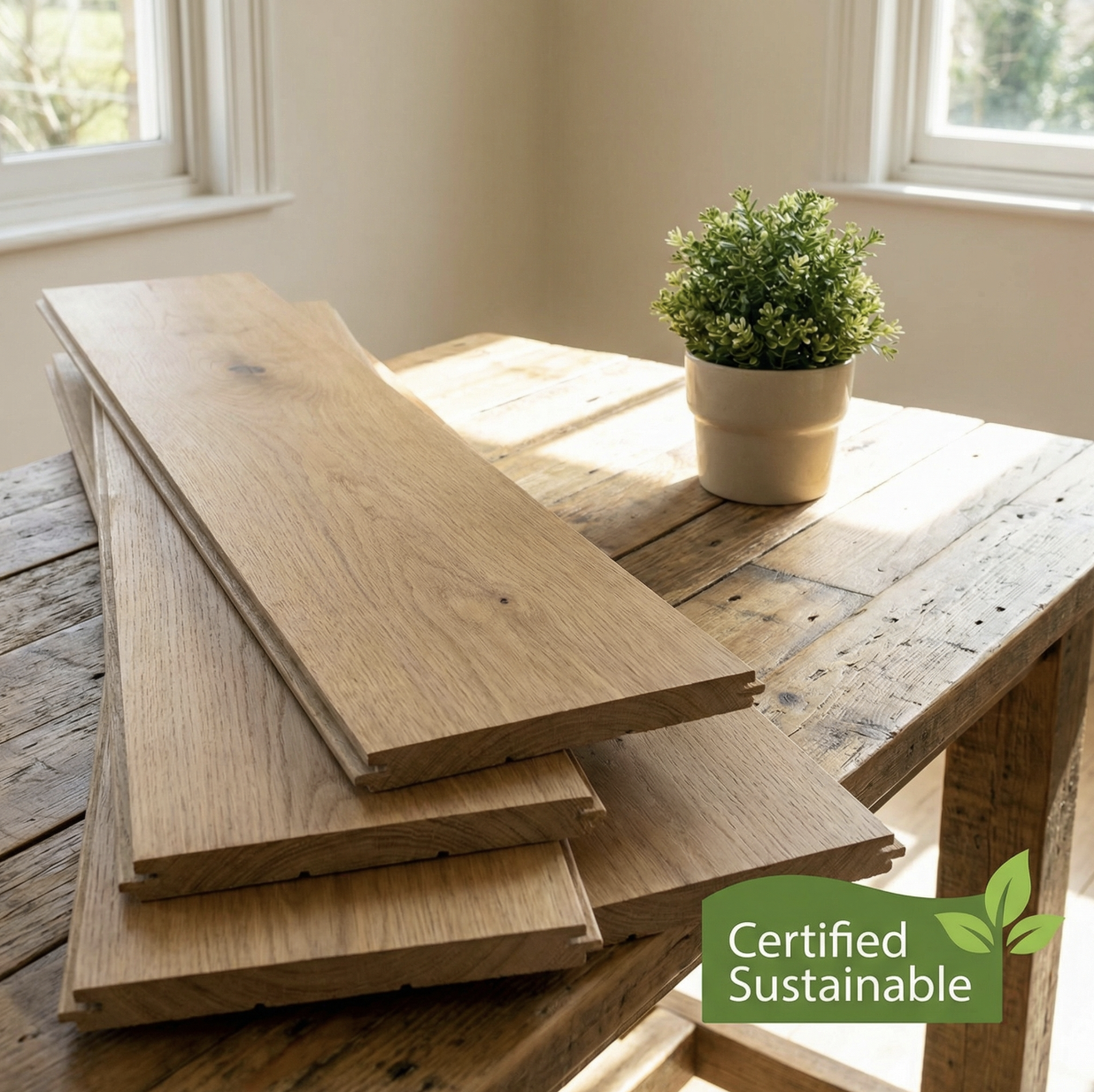
Solid wood uses more timber per square metre but is biodegradable and can be reclaimed or reused at end of life. Both approaches have environmental merit depending on perspective.
Key considerations:
- Engineered flooring uses thinner hardwood veneers
- Solid wood has higher material consumption
- Both should be sourced from certified sustainable forests
Sustainability depends largely on responsible sourcing and manufacturing practices rather than the construction type alone. Look for certifications that verify sustainable forest management.
Which Flooring Is Right for You?
There is no universal winner between solid wood and engineered flooring. The right choice depends entirely on your environment, lifestyle, and expectations for your home.
Solid wood flooring is ideal if you prioritise longevity, refinishing flexibility, and traditional prestige in a stable indoor climate. It’s the choice for homeowners who view flooring as a multi-generational investment and who live in well-controlled environments.
Engineered flooring is better suited for humid climates, concrete subfloors, modern layouts, and homeowners seeking real wood aesthetics with fewer risks. It delivers reliable performance without demanding constant environmental control or extensive maintenance.
Understanding these trade-offs allows you to choose a floor that not only looks good on day one but continues to perform well for years to come, matching your practical needs as closely as your design vision.
Ready to choose the right flooring for your home? Contact UPI today to discuss which option best suits your space, climate, and lifestyle.
